
These nonmanufacturing costs are treated as period expenses, meaning they hit your income statement in the period they occur, rather than being attached to inventory. Higgins Corporation budgets for a monthly manufacturing overhead cost of $100,000, which it plans to apply to its planned monthly production volume of 50,000 widgets at the rate of $2 per widget. In January, Higgins only produced 45,000 widgets, so it allocated just $90,000. The actual amount of manufacturing overhead that the company incurred in that month was $98,000. Recall that selling and administrative costs (fixed and variable) are considered period costs and are expensed in the period occurred. Other fixed overheads will have QuickBooks ProAdvisor to be absorbed on a labour hour basis because there is no information provided which would allow a better approach.
- Lastly, we find out the Total Cost by adding selling and distribution expenses.
- And also show the gross profit less the selling and administrative expenses and that equals the operating income.
- Hence, these facilities will absorb full production costs and generate higher profits due to economies of scale.
- That may not be the actual representation of the company’s profits and can lead to misinformed decisions.
- The company management should use it with diligence and responsibility so as not to create any negative effect in the decision making process.
The Components of Absorption Costing
- It is calculated as (Overhead Cost/Prime cost) x 100.Prime cost is nothing but the sum of direct material cost and direct labour cost.
- The basis of decision-making under the absorption costing technique is the amount of profit which is the excess of sales revenue over total cost.
- In case, the business shows seasonal sales pattern, the production may be built up during the slack season.
- Under this system, if there is no sale the entire stock is carried forward, and there will be no trading profit/loss.
- It is added back to the gross profit before reaching net profit per unit.
- Absorption costing is the full costing method that considers variable and fixed overheads.
- Neither the unit cost is affected nor the amounts of profit by the impact of fixed costs since fixed costs are not considered at all for inventory valuation.
Absorption costing includes a company’s fixed costs of operation, such as salaries, facility rental, and utility bills. Having a more complete picture of cost per unit for a product line can help company management evaluate profitability and determine prices for products. Absorption costing, also known as full absorption costing or full costing, captures all of the manufacturing or production costs, such as direct materials, direct labor, rent, and insurance. It is required by generally accepted accounting principles (GAAP) for external reporting. Under generally accepted accounting principles (GAAP), absorption costing is required for external reporting. Absorption costing is an accounting method that captures all of the costs involved in manufacturing a product when valuing inventory.
Absorption costing: Definition, formula, and how it works

Then we make this comparison between the overhead absorbed and the actual overheads, and that allows us to work out overhead over or under absorption. In this case, if the overhead absorbed was greater than the actual overheads, we have over absorbed. If you like, we’ve charged a little bit too much and we need to make a correction in our management accounts. On the other hand, if the overhead absorbed was less than the actual overheads, we have under absorbed. So, once again, we need to make a correction in our management accounts. Under this technique, cost per unit remains same only when the level of output remains same.
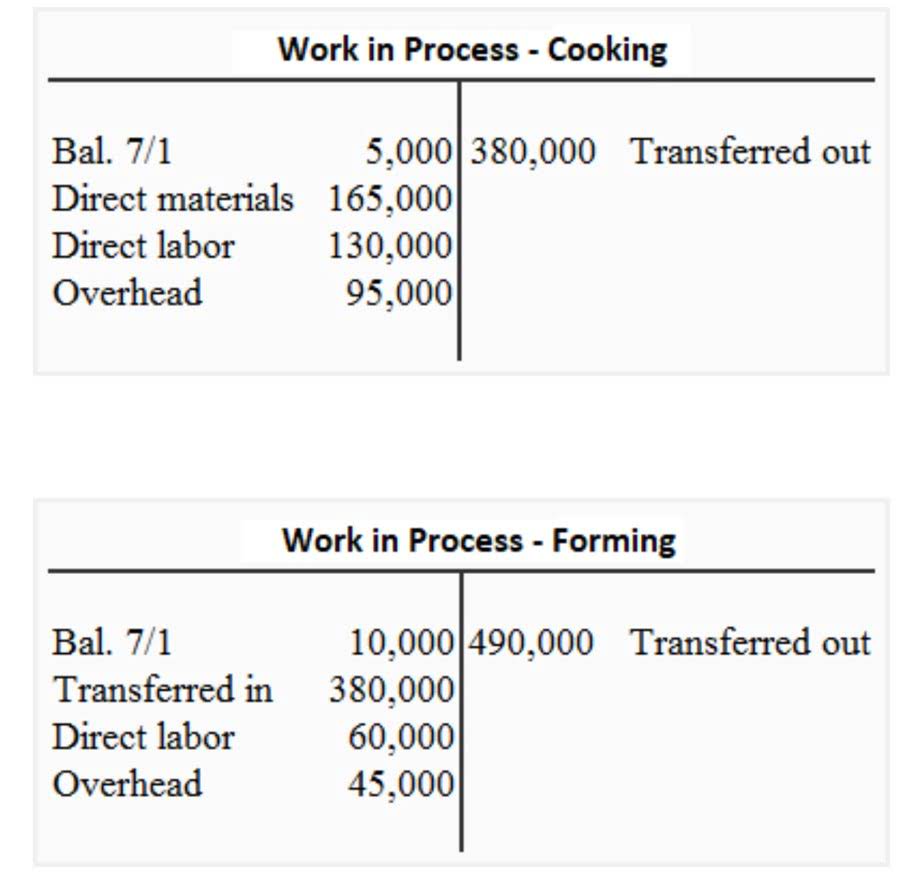
4.2 Full absorption costing — cost flow assumptions
Overall, absorption costing gives businesses a better understanding of all the costs involved in production and ensures compliance with industry standards. We will use overhead absorption costing, which is absorption by labor hour. In absorption costing formula order to be successful in a modern business environment, businesses need to find ways in which to create value. This article will explore one such technique designed to help businesses manage their costs, called traditional absorption costing. Before delving into more modern costing concepts such as Activity Based Costing, it’s vital that you understand more traditional forms of dealing with overhead costs – in particular, traditional absorption costing. Neither the unit cost is affected nor the amounts of profit by the impact of fixed costs since fixed costs are not considered at all for inventory valuation.
Activate a price for the main BOM:
In particular, what a business would like to do is work out the cost of the products it is producing. Now, when doing this, it’s very easy to estimate the direct costs of production (things like direct materials and direct labour). However, it’s more difficult when producing a product to say how much that product cost in terms of the overheads per unit. Absorption costing is a method which allows businesses to charge overheads to products produced, which will then allow them to work out an estimated full production cost per unit. In the case of absorption costing, the cost of a cost unit comprises direct costs plus production overheads, both fixed and variable. Operating statements do not contribution margin distinguish between fixed and variable costs and all manufacturing costs are allocated to cost units.
- When doing an income statement, the first thing I always do is calculate the cost per unit.
- Absorption costing includes a company’s fixed costs of operation, such as salaries, facility rental, and utility bills.
- This is an unsound practice as costs relating to a period should not be allowed to be vitiated by the inclusion of costs relating to the previous period, and vice versa.
- The way fixed overhead costs are recorded and treated differ depending on which costing method is used.
- In such a situation, the absorption costing appears to provide the more logical profit calculation.
- The break-even analysis can decide the number of units required to be produced by the company to be able to book a profit.